Rack-A-Tiers® Wire Pulling Strap
Filed under: Cable Pulling, Raceway, Duct and Conduit, Tools and Cases
When you think of pulling cables through conduit, what do you imagine one of the biggest problems to be? Working the wiring through tight bends? Or how about friction damage? Both of these are undeniably conduit-related pains in the, ahem… tokus, but there’s another possible pulling snafu that’s even more obnoxious: twisted cables.
Now, when I say “twisted,” I’m not talking about a little benign spiraling. I’m referring to the hard core wrapping and tangling that sends conduit friction levels through the roof, and can even cause your cables to start attenuating. The kind of mess that demands a do-over every time.
Spare yourself a lot of frustration, not to mention that overwhleming sense of deja-vu with every re-pull, by enlisting the assistance of a Rack-A-Tiers® Wire Puller Strap. This simple but ingenious cable-pulling implement actually staggers the wires you’re pulling, so while they’re technically together, they stay distinctly separate (read: knot-free and running parallel to one another). The cables enter the conduit untangled, and emerge at the other end the same way. Quite the winning concept, isn’t it?
Here’s how it works. The Wire Pulling strap is approximately 4 inches long, and has triangular wire holes cut out along its length. You just attach a cable to each of these holes, rig the pulling strap to your fish tape or wire puller, and haul away. Having the cables staggered just that little bit with the pulling strip makes a huge difference – as a matter of fact, it can actually cut labor time in half.
Rack-A-Tiers® cable pulling straps are made of powder-coated steel, and come in sets of 3 (one each of red, blue, and green). Having the multiples lets you attach 2 or more together if you have a large number of cables to pull, and the mix in colors helps you to keep different groups of cable visually separated while they’re being simultaneously pulled into the same pass-through or junction box.
Neoprene Rubber Surface Raceway
Over the past 5+ months that I’ve been writing this blog, it’s probably seemed like I have broken-record syndrome, because I can’t seem to stop saying how easy it is to use surface raceways to manage your cables. I mean, you just stick the stuff onto the wall (literally – most of it comes backed with adhesive), open up the cover, pop your cords into it, and snap the lid shut again. If you’re feeling really crazy, you can go a step farther and paint it to match your walls, but basically, using raceway is a no-brainer. But guess what? I just found out that surface raceway has gotten even easier. Meet my new pal, Neoprene Rubber Surface Raceway.
Now, I don’t know if I’m fascinated by the fact that someone actually thought to make a cord channel out of Neoprene, or if I’m just getting lazy, but any way you slice it, this product is really cool. It has the same basic rectangular shape as standard PVC raceway, but because it’s made of Neoprene rubber, it’s extremely soft and flexible. The last time I checked, softness and flexibility weren’t exactly conducive to the structural requirements of a snap-open, snap-closed lid. So this product’s designer decided to do away with the latching cover altogether, and go with a simple slit, instead. And that’s what makes Neoprene raceway so much more convenient. You just push cables right into it – no opening, no closing, no finger fatigue. Nice.
Thanks to its simple design and installation, Neoprene cable raceway is a great introductory cable management product to use around the house, because you don’t need to be a pro to install it. And even though it’s perfectly at home in your office or home theater, it’s absolutely perfect for kids’ rooms, where the general rule of thumb tends to be “the softer and safer, the better.”
ERICO Caddy J-Hook CAT Link System
Basket-style cable trays are the standard pretty much anywhere you need to run cables overhead (like server rooms, manufacturing facilities, and warehouses), but once they’re full, they’re full. Because overfilling a cable tray can damage cables and cause pretty heavy signal attenuation, it’s vital not to exceed capacity. But obeying fill capacity rules can often mean upsizing to a larger cable tray system when you need to expand your network. A complete upgrade not only costs a lot of money, but can also be a major installation headache – when you’re already suspended an entire network of cable baskets from your ceiling or overhead beams, why would you want to go through that again?
Whether you’re about to network a facility from scratch or are facing the influx of more network cables than your current cable tray system can handle, think about opting for the ERICO Caddy J-Hook CAT Link System. This aerial cable support system not only costs significantly less than traditional cable trays, but can also be added onto at any time.
The CAT Link J-Hook System is, as you probably gathered from its name, made up of J-shaped hooks that route cables along the ceiling or support beams of your facility just like cable trays would. In the past, J-hooks weren’t completely in favor with some installers, because there was the concern that they allow the cables to sag between hooks, causing signal loss. But this system has a far superior design: the hooks reduce friction during cable pulls, and have wide bases with smooth, beveled edges that provide excellent support and help to maintain a safe bend radius for your cables.
As I mentioned before, it’s really easy to expand a network with these ERICO caddy J-Hooks, because instead of replacing, you just add on. The hooks (which are available in 1, 2, 3, and 4-inch sizes, by the way) are designed so that you can just attach new hook to existing ones wherever they’re needed, allowing you to tier you cable runs instead of just mixing everything up in one tray. And unlike most cable trays on the market, these J-Hooks require no grounding, screws, rivets, or specialized tools for installation.
MaxCell Fabric Innerduct
Filed under: Cable Pulling, Raceway, Duct and Conduit
It’s pretty well known among cable installers that when you’re pulling cables through long runs of conduit, friction is your biggest enemy. When cables are dragged through conduit, they not only rub together and against the conduit, they can also get caught in spots where the conduit bends. To keep things running as smoothly as possible – and to protect cables against the damaging effects of friction – cables are often sheathed in an innerduct material, like corrugated tubing. Corrugated tubing works great protection-wise, but since it’s rigid and essentially makes cables take up several times as much space as they would on their own, it can really waste conduit space. Wasted conduit space just means you need to use more conduit to get the job done, and more conduit translates into (you guessed it) more money.
So that begs the question: how do protect your cables from friction while saving valuable inner-conduit real estate? Easy. Give up rigid innerducts, and go with a soft and compact option like MaxCell Fabric Innerduct instead. These woven polyester sleeves surround cables to help them glide through twists and turns in conduit, but also conform much more closely to the cable’s shape and size, so you can fit many more cables into one conduit that you would ordinarily be able to with rigid innerduct.
MaxCell Fabric Innerduct is a soft, semi-sheer material, but it still has the ability to protect cables from moisture, petroleum products, chemicals, and UV light, and can be used in both manual/mechanical and air-blown cable pulling applications. It’s available in several versions to fit almost any environment: Standard protects against chemicals in conventional installations, Plenum and Riser Innerducts are low-smoke zero-halogen for safe use in indoor air handling spaces, and the Detectable version contains an 18 gauge copper core tracer that helps the conduit and cables be located easily in underground/buried installations.
Premiere Raceway On-A-Roll™
I’ve mentioned raceway quite a few times since starting this blog, but there’s a great reason why – the stuff is incredibly versatile, and you can use it pretty much anywhere you want to hide cables. If you’ve never used, or even heard of, cable raceway, let me explain a little bit about it. It’s basically a square or rectangular-shaped channel that’s designed to conceal cable runs along walls. You could say that it’s a lot like conduit, except that most raceways have the very handy feature of a hinged lid that snaps open and closed whenever you need to add or remove wires. You typically install raceway onto your walls with double-sided adhesive (which often comes pre-applied), or, if you need a really permanent installation, you can drill holes through the back and screw it onto the wall. In most cases, though, you’d just stick with the adhesive.
While raceway is one of the easiest wire management options out there, it can present a bit of a problem storage-wise for installers who use it in bulk. Conventional cable raceways are rigid, and usually come in 5 to 6 foot lengths. That’s no problem if you only need a few pieces, but when you order it by the hundreds, shipping costs can start to add up, and the product can eat up a lot of storage space on shelves and in work vans. But Premiere Raceway Products has come up with an extremely compact solution: Raceway On-A-Roll™.
Made out of the same sturdy PVC that many raceways are built from, the main difference of Raceway On-A-Roll™ is that it’s manufactured flat, instead of being extruded into a rigid rectangular shape. Because it’s flat, Premiere’s Raceway On-A Roll™ can be rolled up, so it’s very easy to carry and takes up hardly any space. To use it, you just measure out the length you need, cut off a piece with heavy-duty scissors, stick the adhesive surface onto your wall, and fold the raceway into shape along its hinges.
Aside from being very sturdy, one of the standout features of Raceway On-A-Roll™ is that it actually latches open and closed, just like standard cable raceways do. There are other flat-pack rolled raceways on the market, but they form a permanent channel once assembled, so you don’t have the freedom to make changes. With Raceway On-A-Roll™, you change out or add wires at any time, with no hassle.
American Polywater® CableFree® Cable Removal Aid
Filed under: Cable Pulling, Raceway, Duct and Conduit
Cabling technicians can have quite a sticky situation on their hands when removing old cables fom conduit. Aside from obvious challenges like friction, which can make it hard to pull cable around curves or bends in the conduit, there’s the trickier problem of conduit gunk, which can build up and solidify over the years, virtually cementing cables in place. The presence of sticky substances like wax, rust, soap, bitumen and dirt inside of conduit, combined with zero maintenance, almost always guarantees that cuts will need to made in the conduit in order to free cables. But cuts in conduit usually equal steep repair and replacement costs, which do nothing but kill your budget and make the task even more frustrating.
In the interest of saving installers the hassle of conduit cutting and replacement during cable removals, American Polywater® has developed CableFree®, a liquid removal aid that dissolves conduit buildup and frees cables so that they can be easily removed. A product like this can greatly lengthen the life of conduit, because it allows you to keep the conduit completely intact instead of cutting it open. Once cables have been removed, conduit can simply be cleaned and reused, saving you repair and installation costs.
Flat Box™ Low Voltage Surface Mount Box
Filed under: Electrical, Raceway, Duct and Conduit
Any electrician or network technician who’s dealt with surface raceway has probably installed a surface-mount junction box or two in their time. After all, you need outlets, right? While junction boxes themselves don’t pose a problem, if you need to use them in large quantities, they can be a hassle to store in your facility and transport to different jobsites. Outlet boxes in and of themselves are relatively inexpensive components, but when you purchase them in bulk, you can often end up paying a lot extra for shipping just because they take a lot of space. Seeing that they’re just little empty boxes, it seems pretty futile to be shelling out to house and transport packages that are largely filled with air. But thankfully, now there’s a better way.
Meet the Flat Box™, a low voltage surface-mount junction box that actually ships flat, so it takes up hardly any space. You just snap it together when you need it (a process that only takes a few seconds), and you’re ready to go. I have to admit, I was a little skeptical about how sturdy a snap-together outlet box could be, but I was pleasantly shocked – once assembled, the whole thing was very solid. There’s absolutely no trade-off of convenience for stability.
The Flat Box™ also comes with pre-threaded screw holes, so you can quickly and easily install inserts and wall plates into it. And there’s also the very convenient fact that the whole thing can be painted with latex paint to match the rest of your room.
Flat Box™ also comes with scored knockouts for three different raceway sizes, as well as a single knockout for 1″ conduit – just punch out the opening you need, and leave the rest in place.
Surface Raceway – 500 Series
Home theater cables: can’t live with ‘em, can’t live without ‘em. Although visible A/V wiring may be driving you crazy, you can’t exactly get rid of it completely, because that would mean the end of music and movies. But at the same time, how can you fully enjoy your home theater experience if you’re constantly distracted by the sight of exposed (and maybe even messy) cables? Answer: surface raceway.
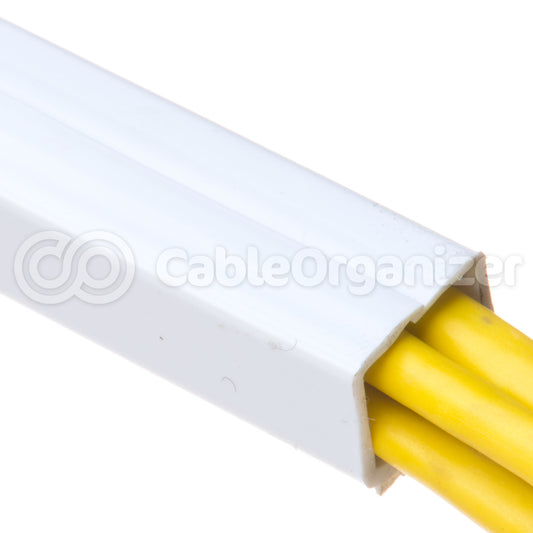
If you’re not familiar with the name or concept of surface raceway, allow me to explain: it’s basically an enclosed channel that sticks onto walls and ceilings by way of a pre-applied adhesive backing, for the purpose of holding, organizing and hiding many types of cords, from home theater cables to network wiring. Generally speaking, most raceways, including the 500 Series, have hinged, latching covers that can be opened and closed as needed so you can easily install or switch out cables.
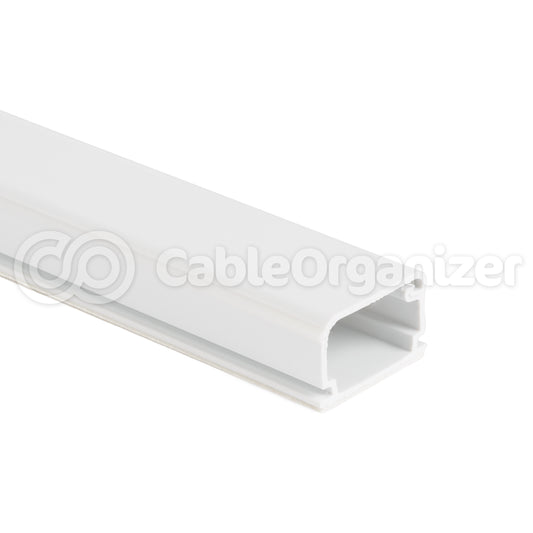
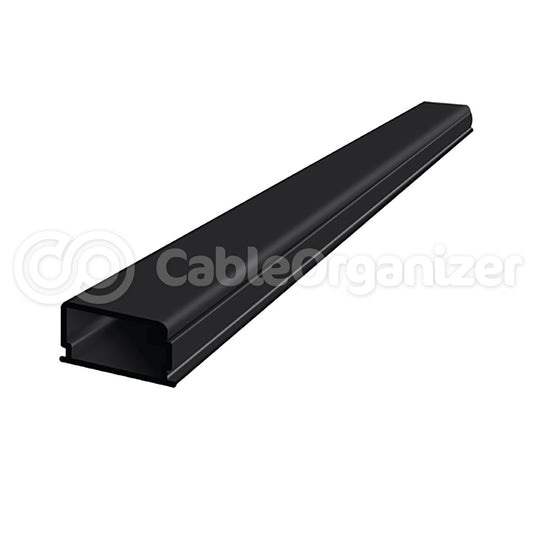
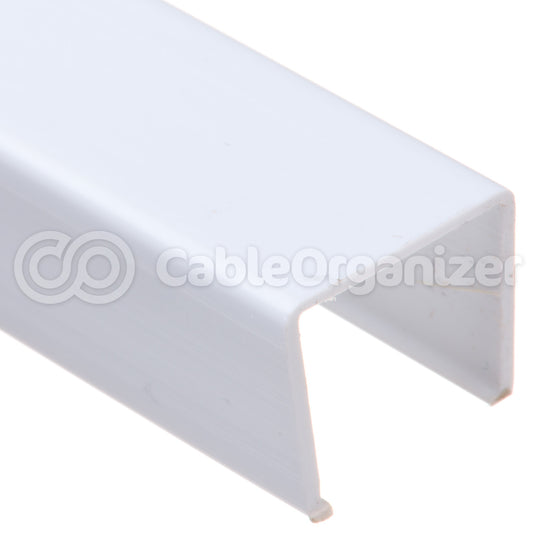
500 Series Raceways are made of flame-resistant PVC, in your choice of white, beige and black. But no matter which color you choose, you can always paint it later with Latex paint, and make it blend in perfectly with you walls, ceilings, or any other element of your decor. It’s really easy to custom-configure, too. Although raceway typically comes in 5′ lengths, you’re not limited to straight-aways. This raceway can be scored with a razor knife and snapped into shorter pieces, or just cut to length with a standard hacksaw.
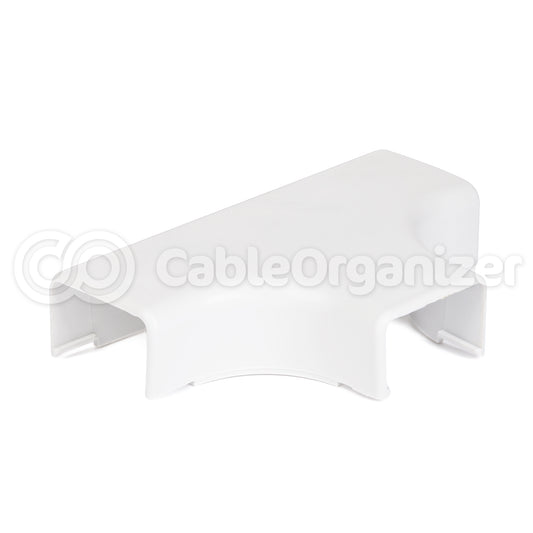
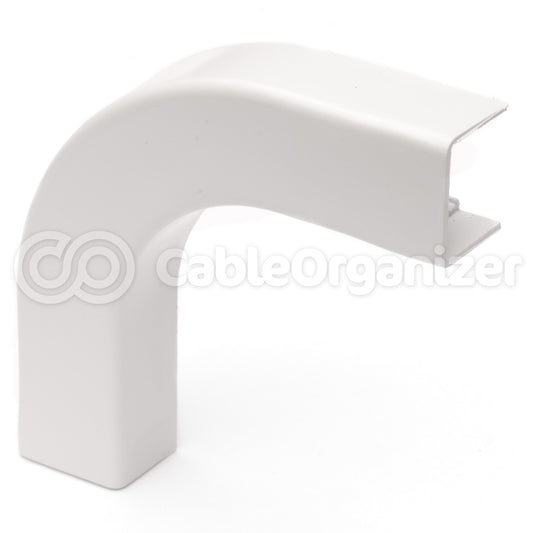
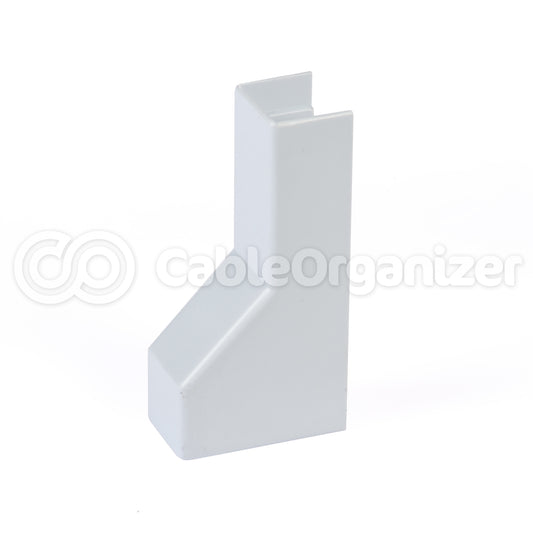
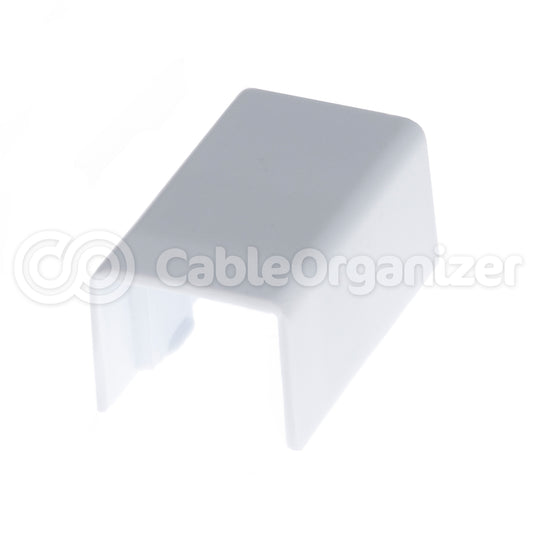
And did I mention that it can even be wrapped around corners or branched off in different directions? Thanks to its long list of optional accessories, which includes inside and outside corners, 3 and 4-way tees, end caps, elbows, junction boxes and ceiling entries, the 500 Series is one of the most versatile surface raceway systems on the market.
Cornerduct 1150 Series Raceways
For all of you cable management fans who admire the qualities of standard surface raceway but wish it were a little more decorative, I’d like to introduce Cornerduct 1150 Series Raceways. These cord channels route cables and wiring along your walls just like any other raceway, but they have the added bonus of being (true to their name) designed for use in corners.
Able to be mounted either vertically (for floor-to-ceiling cable runs) or horizontally (to route cables from one end of the room to the other), Cornerduct has a snap-on cover that makes it easy to install and update wiring. And if you’ve ever wished you could have the luxury of crown molding without the expense and effort, this is the chance you’ve been waiting for! With its triangular, corner-fitting shape and smooth, slightly curved cover, Cornerduct works as both an inexpensive and super functional “fake-out” crown molding. As a matter of fact, you can even custom paint it with latex paint to match the rest of your decor – no one will suspect a thing.
Cornerduct is made from a UL compliant, flame-resistant PVC, so in addition to it being durable, it’s also safer to have around the house. And while it can be used in any room of the house, we recommend it for hiding A/V cable is your living room, home theater, or bedroom.
Cable-Safe
Filed under: Cable Wraps, Desk Cable Organizers, Raceway, Duct and Conduit
Yes, I know I’ve covered office and desk cable management several times already, but considering that so many of us spend most of our waking hours at a computer, I think it’s an important thing to focus on. A little bit of organization can make a huge difference in your sanity level and rate of productivity, especially when you’re dealing with computer cords. And that’s why I’d like to introduce you to the Cable-Safe™.
The Cable-Safe™ is a completely unique cord organizer, in that it doesn’t only lift your computer cables off the floor and out of the way, but your power strip as well. I don’t know about you, but I find it a little annoying that power strips never seem to lay flat on the floor – it’s like they just twist around and end up in going in whatever direction their power cords want them to. But I digress. Anyway, the point that I’m trying to make is that with the Cable-Safe™, you’ll no longer be accidentally kicking your power strip around beneath your desk, and you’ll also be able to affix it any way you’d like on the cable manager and know that it will stay that way.
Now, down to the nitty-gritty: how it works. The Cable-Safe™ is actually suspended from the underside of your desktop, thanks to an adjustable clamp that can either hang from an existing grommet hole, or attach to the desktop itself. It’s equipped with a variety of hooks that can both hold coiled cables and act as shelves for mounting hubs and small power devices. The Cable-Safe™ comes with hook and loop cable ties to keep your cords neatly wound, mini bungee-type straps that can hold hubs in place, and even fun color coded stick-on labels that help you keep track of which cables are which. It’s a very complete and well thought out kit.
Cable-Safes are available individually, or, you can treat your whole office to some under-desk cable management with the Professional Installer Kit, which has everything you need to organize anywhere from 10-15 workstations.