Page look strange? Please Click here or Refresh your browser.

CableOrganizer.com Learning Center

Back to Shopping
FIBER OPTIC INSTALLATION AND TERMINATION

Fiber Optic Termination

Proper fiber optic termination is extremely important when installing a fiber optic network. A network will be unreliable if this function is not performed correctly. Therefore, much attention is given to this area today, and more and more products are appearing on the market to make fiber optic termination easier and more accurate than ever.

What is Fiber Optic Termination?

Fiber optic termination is the connection of fiber or wire to a device, such as a wall outlet or equipment, which allows for connecting the cable to other cables or devices. The purpose of fiber optic termination is to enable fiber cross connection and light wave signal distribution. Proper fiber optic termination will protect the fibers from dirt or damage while in use and prevent excessive loss of light, thus, making a network run more smoothly and efficiently.

Preparing for Fiber Optic Termination

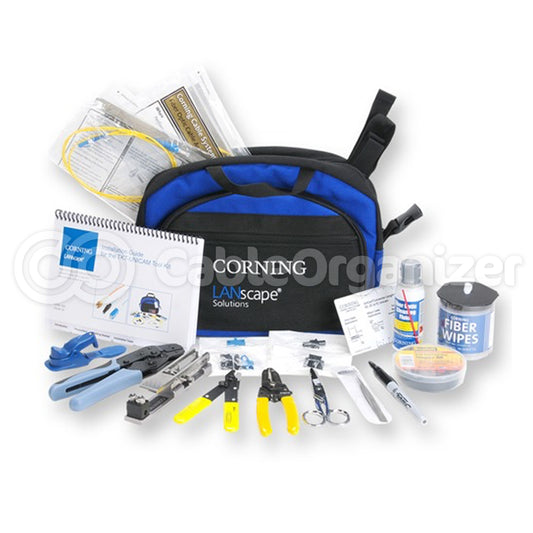
The preparation for fiber optic termination includes gathering the supplies you will need, stripping the outer jacket, cutting the Kevlar, and stripping the buffer or coating. For supplies, you’ll need safety glasses, a fiber disposal bin, connectors, fiber optic cable, epoxy and syringes (or Anaerobic adhesive), and polishing film. Tools used in fiber optic termination include fiber stripper, scribe, Aramid yarn scissors, adjustable cable jacket stripper, polishing puck, polishing glass plate, and a rubber pad to polish the PC connectors, especially for single mode termination.

You’ll also need testing equipment such as a power meter, FOtracer, reference test cables, a LED light source, and a microscope to view the connector.

Two Methods of Fiber Optic Termination

One type of fiber optic termination is the use of connectors that join two fibers to form a temporary joint. Splicing is the other type, and this involves connecting two bare fibers directly without any connectors.  Splicing is a permanent method of termination.

Fiber Optic Splicing Methods

Mechanical and fusion are the two different fiber optic splicing methods used today. Mechanical splicing aligns two fiber ends to a common centerline for the light to pass from one fiber to another. An adhesive cover or a snap-type cover is used to permanently fasten the splice.

Fiber optic cable mechanical splices are available for single mode or multimode fibers. They come in handy for permanent installations or quick repairs because they are small and very easy to use.

There are two steps involved in fusion splicing. These include the two fibers being precisely aligned and generating a small electric arc for melting the fibers and welding them together. The fiber optic cable fusion splicing has a low-loss connection, but the high precision splicer is bulky and expensive.

Buffer Tubing Protection

Once a cable enters a fiber closure, the jacket around the fiber cable is removed, and individual fibers are exposed. To prepare the fibers for splicing or termination, this process is needed. To prevent fiber cables from breaking, flexible buffer tubes are inserted into them.  This allows more resistance to crushing or other types of impact forces. The tensile strength is not so good because the fiber is not free to float, but the cable will be lighter and more flexible.

Always Follow Instructions in Fiber Optic Termination

The fiber optic termination process has become much easier today with an increased number of installers and readily-available termination products. But even if you are a professional installer, always follow fiber optic termination instructions closely. Be sure you have the exact instructions for the connector you are using because connectors are constructed differently.

There are many college classes as well as online classes that offer professional training in fiber optics termination. The basic skills you will learn in fiber optic termination include:

  • How to Prepare Cable for Termination
  • How to Strip the Fiber
  • How to Prepare the Epoxy (syringe kit)
  • How to Attach the Connector to the Fiber
  • How to Scribe and Polish
  • How to Inspect Your Connection
  • How to Test Your Connector

Fiber optic termination is so important that more than 80 types of connectors have been released from manufacturers.  There are different styles of connectors to fit with almost any type of fiber optic network plan. This is why so many companies and organizations are choosing fiber optics to build or re-design their networks today.


Fiber Optic Connectors

In the past, fiber optic connectors posed a deep concern for network installers because they were difficult to use. But today, manufacturers are making connectors that are more user-friendly and that adhere to certain industry standards. Thanks to these improvements, more and more companies are turning to fiber optic systems to build their business networks.

Functions of Fiber Optic Connectors

The fiber optic connector has several functions. It aligns the fiber with emitters in transmitters, adjacent fibers in splices, and photo-detectors in receivers. With the development of various connector styles, each one has its own advantages, disadvantages, and capabilities. All fiber optic connectors have four basic components, which are the ferrule, connector body, cable, and coupling device.

Types of Connectors

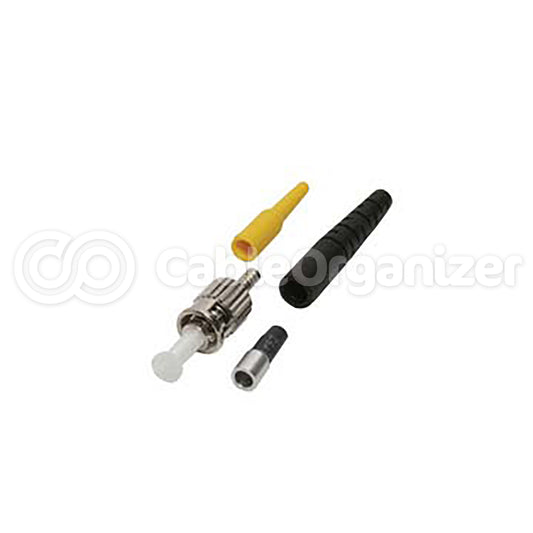
For multimode networks such as those used in buildings and campuses, the ST is the most common fiber optic connector. This connector has a long cylindrical ferrule for holding the fiber and a bayonet mount. The ST connector is considered the most popular multimode connector because it is cheap and easy to install.

The SC fiber optic connector, which is a snap-in connector that latches with a simple push-pull motion, is used in single mode systems. This connector shows excellent performance and is also available in a duplex configuration. The MU connector is more popular in Japan and looks like a miniature SC with a 1.25-mm ferrule.

A standard ceramic ferrule connector, which is half the size of an ST connector, is the LC connector. This connector is used in single mode systems, performs well, and is easily terminated with any adhesive.  A connector that is similar to the LC, but has a shutter over the end of the fiber is the E2000/LX5.

Used in multimode systems only, the MT-RJ connector is duplex with both fibers in a single polymer ferrule. Pins are used for alignment with male and female versions.

The Opti-Jack is a rugged, but neat duplex connector designed around two ST-type ferrules in a package that’s the size of an RJ-45.  This connector has both male and female (jack and plug) versions.

An inexpensive duplex connector that uses no ferrule at all is the Volition connector. This connector aligns fibers in a V-groove like a splice. Mainly used for pre-terminated cable assemblies is the MT connector, which is a 12-fiber connector for ribbon cable.

Inspecting Fiber Optic Connectors

To diagnose any problems or to check the quality of the termination procedure, a fiber optic microscope is used to inspect fiber optic connectors. The microscope allows inspection of the connector from any angle either by tilting the connector or illuminating the angle.

When inspected, the connector should have a smooth and scratch-free finish with no signs of cracks or chips on the fiber where it is either pulling back into the ferrule or protruding from the end.

Fiber Optic Connectors and Safety

As a safety precaution, a worker should always check to make sure there is no power present in the cable before looking at it in a microscope. The fiber end face of a connector should never be touched. Always keep unused connectors covered with a plastic dust cap and discard any damaged connectors.

With the wide variety of fiber optic connectors available today, companies can easily convert to fiber optic networks and start enjoying the benefits of a faster, more efficient work environment.


Fiber Optic Cleaning

One of the most important procedures in the maintenance of a fiber optic system is fiber optic cleaning. This is required to keep quality connections between fiber optic equipment. Keeping the fiber end face and ferrule on the fiber optic connectors absolutely clean is very essential. If any particles such as dust, lint or oil get on the end face, this will jeopardize the completeness of the optical signal that is being sent over the fiber.

These particles can also cause other problems such as scratching the glass surface, instability in the laser system, and a misalignment between the fiber cores. Misalignment between the fiber cores can significantly degrade the optical signal.

Steps to Follow Before Cleaning Fiber Optics

Before cleaning fiber optic connectors, make sure the cable is disconnected from both ends and turn off any laser sources. Always wear safety glasses and inspect the connectors before you clean them. Before a connection is made, the connectors have to be inspected and cleaned. A connector housing should be used for plugging or unplugging a fiber. A protective cap should be placed on unplugged fiber connectors. The unused caps can be kept in a sealed container.

When cleaning fiber optics, the end face of the connector should never be touched and also the clean area of a tissue or swab should not be touched or reused.

When using alcohol, the portion of a tissue or swab where it has been applied or the dispensing tip of an alcohol bottle should never be touched. Alcohol is flammable, so it should not be used around an open spark. Also, never leave alcohol residue on the end face because this could damage the equipment.

Cleaning Fiber Ends

The fiber end should be inspected with a fiberscope of at least 200x magnification, and if it is contaminated, it should be cleaned with the dry cleaning method.

Cle-top cleaner is recommended for the dry cleaning method. With the Cle-top cleaner, the fiber end can be cleaned with a cloth. The used cloth is then thrown away, and with just the pressing of a thumb a clean cloth will emerge. After cleaning, the fiber end should be inspected with a fiberscope. If the fiber end is still contaminated after using the dry cleaning method, repeat the process.

Inspect the connector again with the fiberscope, and if it is still contaminated, use the wet cleaning method, followed by a dry cleaning method until there is no residue.

With the wet cleaning method, an optical quality cleaning cloth and fluid are used. Even though isopropyl alcohol is frequently used as a cleaning fluid, it is slow at drying and can leave residue. Opticwipes cleaning cloth and fluid are recommended.

When using this method, dampen the cleaning cloth with the fluid and wipe the end face of the connector several times. Repeat this and then with a clean, dry area of the cloth, clean the fiber end.

The fiber should not be used if the cleaning is unsuccessful because the contamination could be due to scratching, improper polishing, or some other damage.


Fiber Optic Wire Management

With the increased use of fiber optics in industries today, much focus is placed on installing and managing fiber optics and fiber optics safety. Complex wiring requirements for companies and organizations are managed more efficiently and economically with fiber optic wire management systems. Fiber optic networks can also accommodate numerous types of communications cabling.

The fiber optic system offers flexibility to the workplace by enabling the change of a conference room overnight to a multi-media business center. It also makes upgrading easier and enables a facility to accommodate new communication technology.

But without proper wire management, fiber optics networks will be more of a hassle than a help. Here are some tips about fiber optic wire management.

Products Used in Fiber Optic Wire Management

Wire enclosure applications that blend into walls or ceilings offer an affordable and attractive solution for industrial, residential or commercial environments. For consistent data transmission in fiber optics, this application provides a 1-inch bend radius. In the industrial environment, maintaining the precise bending requirements of fiber optic cables ensures noise reduction and better performance.

Harness wraps and cable ties, which bundle and protect cables and cords while limiting the bend radius of the fiber optic cable, are great products as well.

Another wire management product that is economical, lightweight, and flexible is the wire loom. The wire loom protects fiber optic wires from vibration, puncture, and abrasion.

For areas with a lot of foot traffic, there are cord covers that are made specifically for fiber optics cables, which are able to withstand heavy loads for maximum protection. These keep fiber optic cords hidden and protected.

Protecting Your Fiber Optics Investment

Fiber optic cables are often subjected to many harsh indoor/outdoor environments such as radiation, extreme heat, corrosion, vibration, high electromagnetic interference, excessive cold, and high radio frequency interference. But with the proper wire management system, your cables can be protected from these environments.

For protection against tension and temperature changes in more harsh environments, the fiber is placed into semi rigid tubes. This allows the cable to stretch, but not the fiber. Fiber optic cables are also designed for protection against damage from water and can still function if water molecules are under the cable’s outer jacket.

Provide more safety in the workplace with the many available fiber optic wire management products. Keep workplace floors clear and safe from cords and cables with products that cover, hide, and protect them. Tripping hazards can also be avoided with fiber optic cord covers.

Use special fittings to reroute cables around corners and elbows. This will ensure proper installation while also keeping your wires safe and out of sight.

If you’re not sure where to start with your fiber optics network or if you need a dependable wire management strategy, hire an installer that specializes in the type of fiber optic network you’ll need for maximum benefits.


VIEW MORE ARTICLES

©2009 CableOrganizer.com, Inc. This article may not be reproduced in part or in full without the written permission of CableOrganizer.com.


Related Products