Page look strange? Please Click here or Refresh your browser.

CableOrganizer.com Learning Center

Back to Shopping
THE HISTORY AND PRODUCTION OF FIBER OPTICS


Introduction to Fiber Optics

During our current age, the increasing ability to transmit more information over longer distances more quickly has expanded the boundaries of our technological development in many areas such as data networks, wireless and satellite communications, cable operators, and broadcasters.

All of this has become possible by the use of fiber optics, and as technology demands insist upon improved performance, fiber optics will continue to increase.

What are Fiber Optics?

Fiber Optics, also called optical fibers, are microscopic strands of very pure glass with about the same diameter of a human hair. Thousands of these optical fibers are arranged in bundles in optical cables and are used to transmit light signals over long distances. The bundles are protected by a jacket, which is the cable's outer covering.

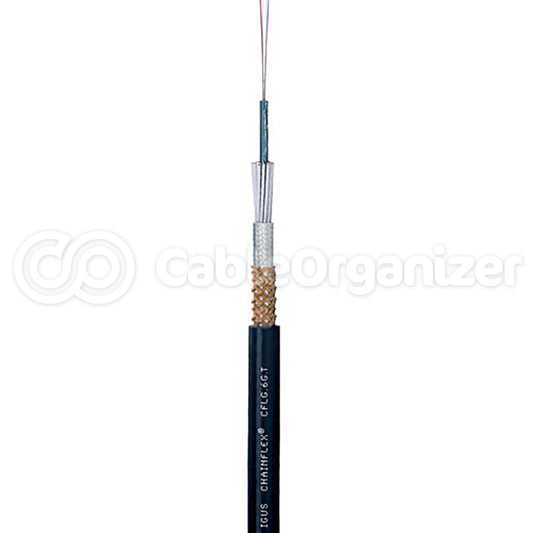
The single optical fiber consists of the core which is the thin glass center of the fiber where the light travels, the outer optical material that surrounds the core and reflects the light back into it is the cladding, and the plastic coating that protects the fiber from moisture and damage is the buffer coating.

Single-mode and multi-mode are the two types of optical fibers. The single-mode, used for long distances, has small cores and transmits infrared laser light. The multi-mode, normally used for short distances, has large cores and transmits infrared light.

Fiber Optics versus Copper

Even though the fiber optic system is similar to the copper wire system, fiber optics are steadily replacing copper wires today as an appropriate means of communication signal transmission.

Some advantages fiber optics have over copper are the dollar savings because they are less expensive, fiber optics are thinner, and they have a higher carrying capacity. Optical fibers are well suited for carrying digital information. There's no electricity so the danger of fire is reduced. Fiber optic cables are lightweight, take up less space, and are also flexible.

History of Fiber Optics

Fiber optics go back as far as Roman times, but the first was an "optical telegraph," which allowed operators to relay a message from one tower to the next by a series of lights mounted on the towers. This was invented in the 1790s by the French Chappe brothers. Great achievement was made in optical science over the course of the next century.

Fiber Optics during the 1800s

Physicists Daniel Collodon and Jacques Babinet reported in the 1840s that light could be directed along jets of water for fountain displays. In 1854, John Tyndall, a British physicist, demonstrated that light could travel through water jets, thereby proving that a light signal could be bent.

In 1880, Alexander Graham Bell patented an optical telephone system which assisted in the advancement of optical technology. Also in 1880, William Wheeler invented a system of light pipes that illuminated homes from an electric arch lamp located in the basement.

Bent glass rods were used to illuminate body cavities in 1888 by Dr. Roth and Professor Reuss of Vienna. Henry Saint-Rene designed a system of bent glass rods to guide light images in an early television scheme in 1895. A patent was applied for by an American, David Smith, in 1898 for a dental illuminator using a curved glass rod.

Fiber Optics Move Forward in the 1900s

The first person to transmit an image of a light bulb filament through a bundle of optical fibers was Heinrich Lamm in 1930. Then, Holger Moller Hansen applied for a Danish patent in 1951 on fiber-optic imaging in which he proposed cladding glass or plastic fibers with a transparent low-index material, but was denied because of the Baird and Hansell patents in 1926.

An undergraduate student named Larry Curtiss was hired by Basil Hirschowitz and C. Wilbur Peters in 1955 to work on their fiber-optic endoscope project. In 1956, Curtiss made the first glass-clad fibers by rod-in-tube method. And in 1957, Hirschowitz was the first to test fiber-optic endoscope on a patient.

Elias Snitzer of American Optical published a theoretical description of single mode fibers in 1961. In 1970, the scientists at Corning Glass Works reached their goal of making single mode fibers with attenuation less then 20dB/km. They achieved this through doping silica glass with titanium.

In 1973, Bell Laboratories developed a modified chemical vapor deposition process that heated chemical vapors and oxygen to form ultra-transparent glass that can be mass-produced into low-loss optical fiber. This process still remains the standard for fiber-optic cable manufacturing.

The Dorset (UK) police installed the first non-experimental fiber-optic link in 1975, and the first live telephone traffic through fiber optics occurred in Long Beach, California two years later.

In the late 1970s and early 1980s, telephone companies used great numbers of fibers to rebuild their communications infrastructure. In the mid-1980s, Sprint was founded on the first nationwide, 100 percent, fiber-optic network.

In 1991, Desurvire and Payne demonstrated optical amplifiers that were built into the fiber-optic cable itself. The all-optic system could carry 100 times more information than cable with electronic amplifiers.

The first all-optic fiber cable called TPC-5, which used optical amplifiers, was laid across the Pacific Ocean in 1996. In 1997, the Fiber Optic Link Around the Globe (FLAG) became the longest single-cable network in the world and furnished the groundwork for the next generation of Internet applications.

Today, the medical, military, telecommunication, industrial, data storage, networking, and broadcast industries are able to implement and use fiber optic technology in a variety of applications.


A Growing Fiber Optic Market

In 1999, it was reported that an estimated $14.6 billion was spent on fiber optics items. These tremendous figures were greatly attributed to the growing trend of the Internet. But today, more and more companies are using fiber optics for other purposes as well - not just for the Web.

Some types of companies that use fiber optics today include computer offices, telemarketing networks, manufacturing plants, Internet broadband companies, online video providers, Ethernet users, medical offices, hospitals, financial institutions, communications companies, and many others.

Fiber Optic Set-Backs and Changes

Fiber optics has been used in many different applications over the past 10 years and went through a time period of amazing growth during the early 1990s. Unfortunately, there have been a few disadvantages of fiber optics that have held many companies back from applying this method.

One set-back has been the cost of initial set up and the time involved in changing over to fiber optics. Though future benefits might be enjoyed, many companies are just too busy or don't have the funds to make the change. Another disadvantage has been a lack of standardization in the fiber optics industry. Also, the loss of signal strength when bending the fiber optical cables around corners made this technology less appealing to companies that provide service to the homes or businesses of their customers.

These disadvantages, however, are quickly fading. Fiber optic manufacturers that provide fiber, cable, connectors, testing instruments, and cleaning supplies have been working hard to standardize the industry. More and more people are training in fiber optics to become engineers, installers, and network managers so a dose of healthy competition will likely bring fiber optic design and installation prices down.

Signal Loss Solutions for the Future

The problem with signal loss will also be minimized as fiber optic technology improves. Corning Incorporated, a major provider of fiber optics products, recently announced a new design that enables bending around very tight corners with virtually no signal loss. This new technology is called nanoStructures (TM) and will likely make fiber optics much more appealing to cable, Internet, and communications companies. The technology is also compliant with industry standards and can be installed using the same procedures as other fiber optics networks.

With new technologies such as nanoStructures, fiber optics can be used to deliver services to high-rise apartments and homes across the nation. Customers will be able to enjoy faster Internet, better quality content, and more interactive features than ever before.

Online Video and Fiber Optics

A popular trend in the Internet market today is online video. Google's YouTube and other similar services are taking the Internet by storm, and fiber optics is expected to play a big part in online video. Fiber optics will provide better, clearer pictures and will also expand the Internet's bandwidth capabilities.

The Internet today contains much more data than it did just a few years ago. More companies and individuals are using the Internet. More people have Internet in their homes than ever before. And, more people are downloading entire movies, which take up a lot of bandwidth. So, the need for bandwidth to handle all this data and activity is tremendous.

Cable modems are working great right now, but may not be able to keep up. Fiber optics may be the key to unlock the Internet's full potential.


Making Optical Fibers

The impact of the technology of optical fiber in our communication system is astounding. Many have wondered how these optical fibers are made. There are several steps involved in making an optical fiber, which include making a preform glass cylinder and drawing fibers from the preform.

Optical Glass

Optic fiberglass, a replacement for copper wires, is an ultra-high-purity silica glass that can be stretched into long, hair-thin fibers and used to transmit information over long distances. Fiber optic strands consist of an inner core of high purity glass with a high refractive index that transmits light, and an outer core of low refractive glass that keeps the light signal from seeping out the sides. The basic unit from which fibers are drawn is called a "preform."

Preform Glass Cylinder

A preform is a glass cylinder that might be several inches long and several inches thick with a different refractive index to provide the core and cladding of the fiber. The fiber's capability to reflect light is decided by the creation of the cladding glass relative to the core glass. The reflection usually occurs by creating a higher refractive index in the core of the glass than in the surrounding cladding glass.

Modified chemical vapor deposition, which is a chemical process used for producing high-performance solid materials, is used for making the glass for the preform. Vapor deposition, outside vapor deposition, and vapor axial deposition are the three methods usually used in this process.

The most common process used is the outside vapor deposition because it yields a low-loss fiber that is very well suited for long-distance cables. This process is highly automated and usually takes several hours for completion. Once the preform blank is cool, it is tested for quality control and then placed into a fiber drawing tower.

Drawing Fibers from Preform

The drawing tower has a temperature of 3,452 to 3.992 degrees Fahrenheit or 1,900 to 2,200 degrees Celsius. This tower consists of a furnace that heats the tip of the blank until a piece of molten glass falls from the blank, pulling a thin strand of glass, which is the beginning of an optical fiber. Then the fiber goes through a monitor to ensure a specified outside diameter. Next, ultraviolet lamps are used for applying and curing coatings. The fiber is wound on spools at the bottom of the draw and each fiber is assigned a unique identification number. The optic fiber cables are formed by being coated, colored and bundled in protective jackets.

Once the optical fibers are finished they are tested for bandwidth, tensile strength, fiber geometry, operating temperature and range of humidity, refractive index profile, attenuation, and temperature dependence of attenuation. Cables that are going to be used undersea must have the ability to conduct light under the water.

From Optical Fiber Production to Many Uses

The fibers, after they have passed quality control, are sold to many companies to improve capacity and speed, and to replace their old copper wire systems. Some types of companies that use fiber optics include network providers, telephone, power, and cable companies, industrial plants, and computer technicians.


Cable Designs for Fiber Optics Networks

Today in North America, there are two basic cable designs that are used for designing fiber optic networks. These are loose-tube, which are used in many outside plants, duct, direct-buried applications, and tight-buffered, which are primarily used inside buildings. Before selecting a cable design, there are still many more decisions to make after determining whether the cables will be used inside or outside.

Resistance to chemicals, moisture, and any other types of in-ground or atmospheric conditions are some environmental concerns. Some mechanical properties that are very important are flexing, tensile strength, bending, and impact resistance.

Loose Tube Fiber Optic Cable Assembly

Loose tube cables are made up of numerous fibers inside a small plastic tube that are coiled around a central strength member and jacketed, providing a small, high fiber count cable. These cables are excellent for outside plant applications since they can be made with the loose tubes filled with water-absorbent powder or gel that withstands high moisture conditions. They also give a more stable transmission under continuous mechanical stress.

Loose tube cables can be strung overhead, buried directly into the ground, and also used in conduits, since they are designed to endure harsh outdoor temperatures, have high tensile strength, and have a large bend radius and diameter. The fibers must be handled carefully and protected to prevent damage since they have only a thin buffer coating. 

Without interfering with other protected buffer tubes that are being routed to different locations, the buffer-tube design of the loose tube cable allows easy drop-off of groups of fibers at intermediate points. The loose tube cable design is also helpful in the administration and identification of fibers in the system.

Loose-buffered cables are available in all-dielectric construction, armored construction, and riser-rated constructions.

Tight-Buffered Fiber Optic Cable Assembly

Even though some tight-buffered cable designs are for outdoors, most of them are for indoor applications. These individual fibers are coated with a buffer coating and are protected during routing, handling, and connectorization by the rugged cable structure, which comes from their tight-buffered design. The tensile load is also kept away from the fiber by the yarn strength members.

The tight-buffered design is very flexible. It has low crush and impact resistance along with a low attenuation change at lower temperatures. The tight-buffered design is well-suited for "jumper cables" that connect outside plant cables to terminal equipment, and also for linking various devices in a premises network

The breakout design and distribution design are the two typical constructions of the tight-buffered cables. The breakout design has an individual jacket for each tight-buffered fiber, and the distribution design has a single jacket protecting all of the tight-buffered fibers.

Single-Fiber Cables

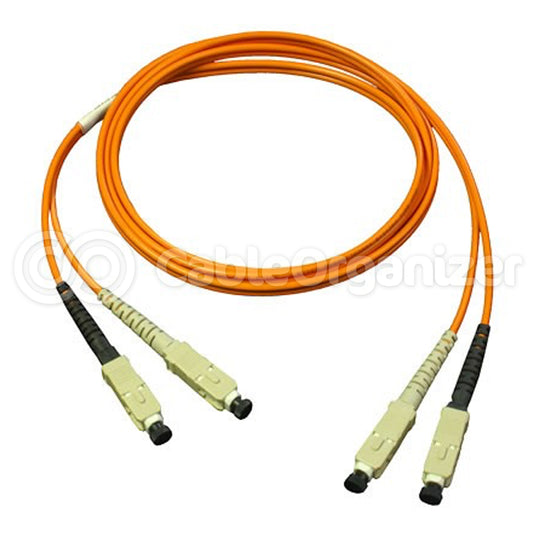
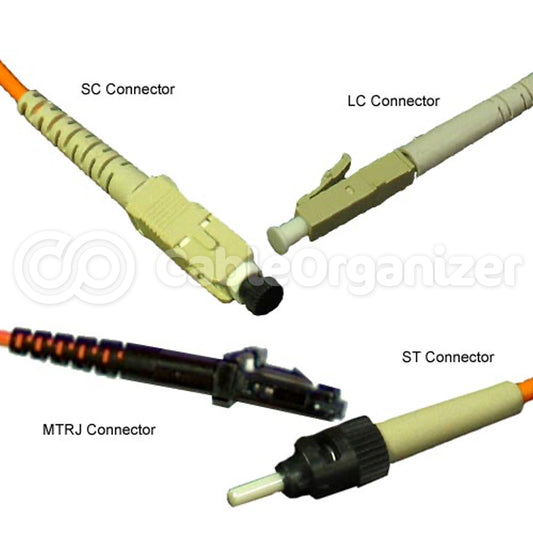
Single-fiber cables have a single fiber strand surrounded by a tight buffer. To terminate loose-tube cables directly into receivers and other active and passive components, single-fiber tight-buffered cables are used as pigtails, patch cords, and jumpers.

Multi-Fiber Cables

Multi-fiber cables have two or more tight-buffer cables that are contained in a common outer jacket. General building, risers, and plenum applications often use multi-fiber, tight-buffered cables. These cables are also used for handling ease and flexibility within buildings and alternative handling and routing.

With these innovative network designs, fiber optics have paved the way for easier, more efficient custom cable assembly.  Whether for an administrative, medical, or industrial network, fiber optics networking is quickly becoming the number one choice.


VIEW MORE ARTICLES

©2009 CableOrganizer.com, Inc. This article may not be reproduced in part or in full without the written permission of CableOrganizer.com.


Related Products

  • UNITAG 10 PACK
  • Unitag cable ID labels were developed to provide a quick, easy method to clearly label any type or size cable or groups
  • $4.5
  • >> More info